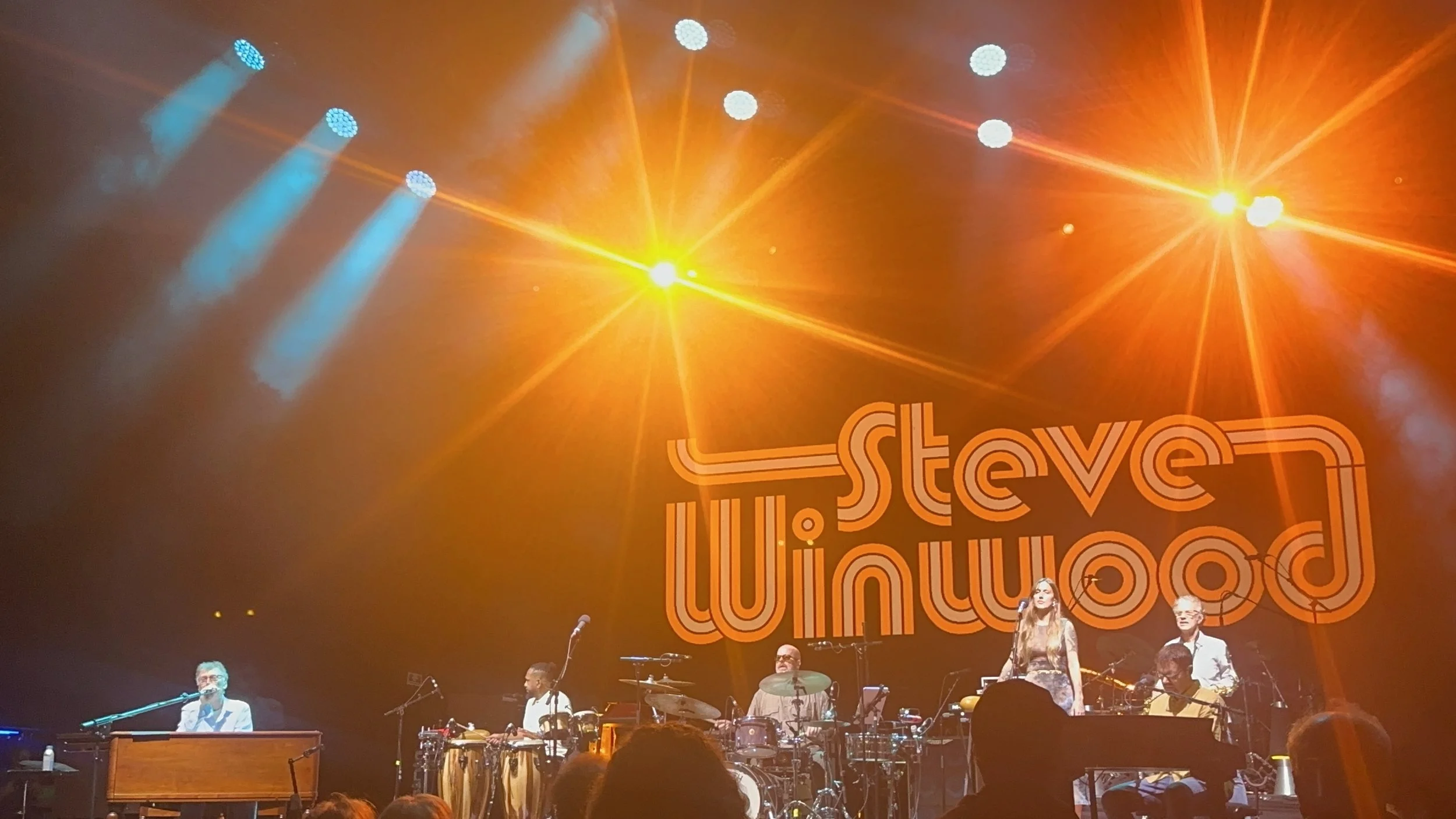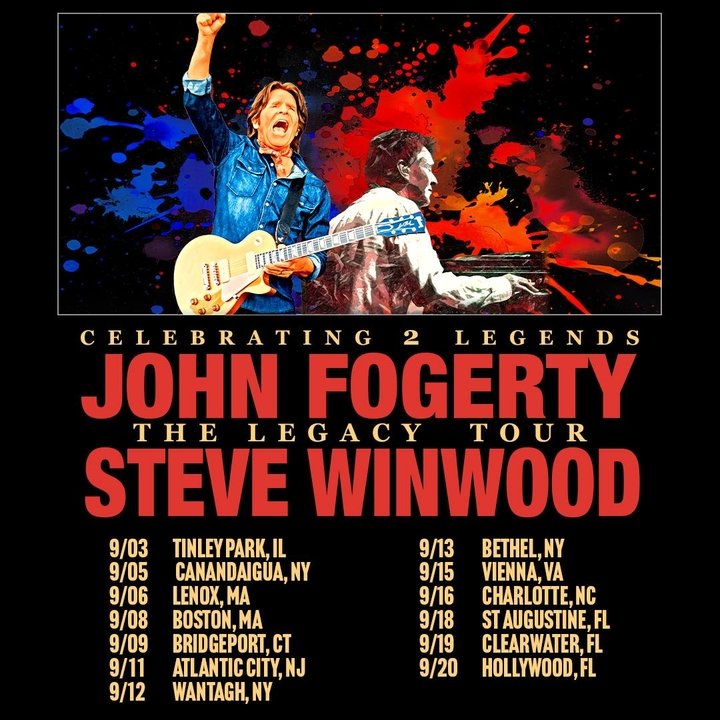
Steve Winwood - Live in Concert at Jones Beach Theater, Wantagh, Long Island, NY — September 12, 2026 & Bethel Woods Center for the Arts, Bethel, NY — September 13, 2026 With John Fogerty
Steve Winwood - Live in Concert at Jones Beach Theater, Wantagh, Long Island, NY — September 12, 2026 & Bethel Woods Center for the Arts, Bethel, NY — September 13, 2026
With John Fogerty
Review by Robert Corich
Two Nights, Two Legendary Venues, One Extraordinary Journey
There are concerts you go to because you want to hear the music.
And then there are concerts where the music, the location, the history and the moment somehow collide to create something rather more special.
Seeing Steve Winwood twice in the New York area was very much the latter.
One night at the magnificent Jones Beach Theater in Wantagh, Long Island, with the Atlantic air surrounding the venue; the following night at Bethel Woods Center for the Arts — quite literally on the hallowed ground where the 1969 Woodstock festival took place.
Two very different venues.
Two very different atmospheres.
And one Steve Winwood.
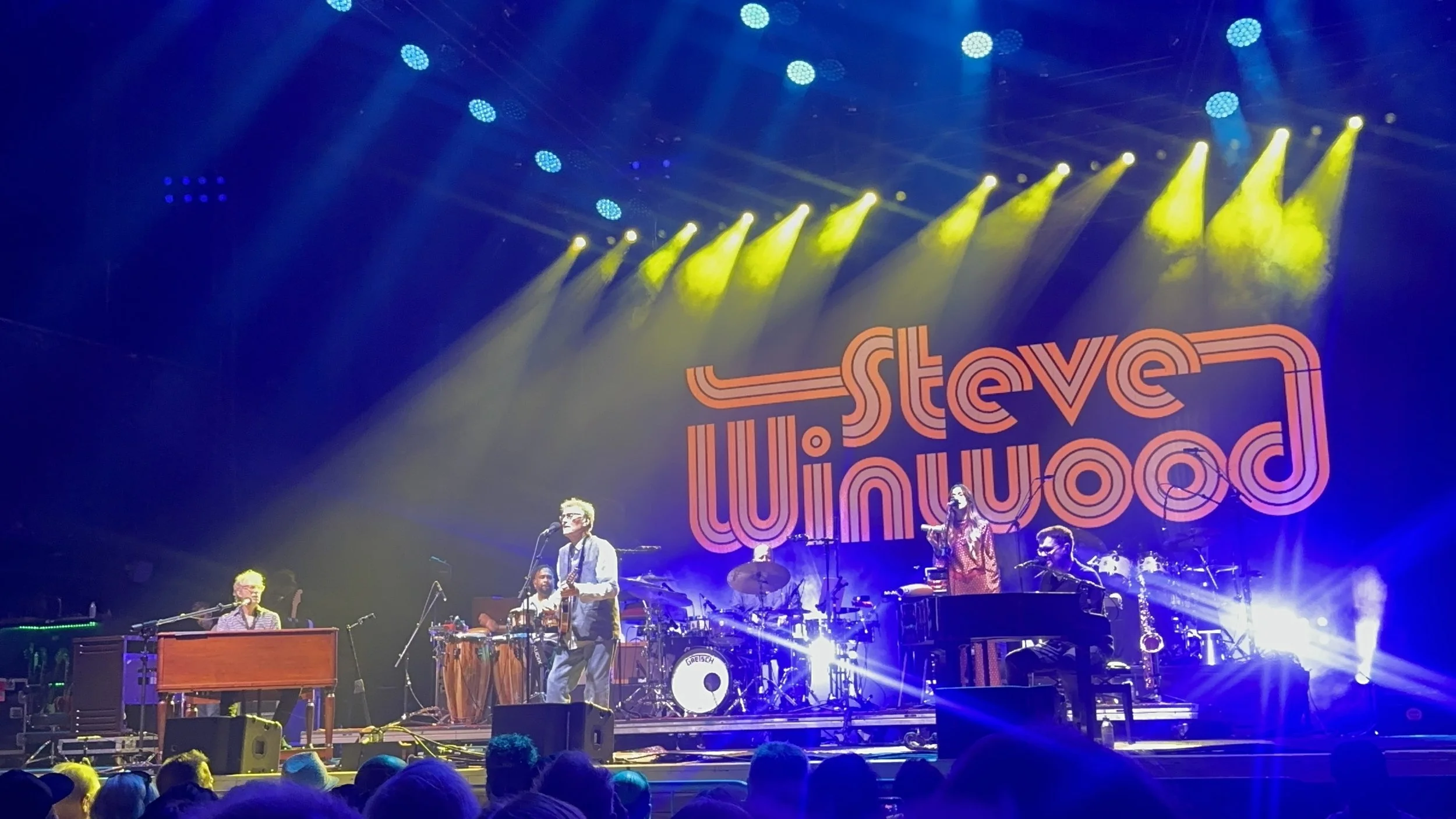
This was the 2026 tour bringing together two extraordinary survivors of the great British and American rock traditions — Steve Winwood and John Fogerty. Although Fogerty’s performance was longer, this was never presented as a conventional headliner-and-support arrangement. It was a pairing of two major artists, each bringing an extraordinary catalogue of music to the same stage.
And on both nights, I was fortunate enough to be seated close to the stage, which also gave me an interesting perspective on the audience reaction.
When Steve’s set finished, several seats and even rows around us emptied almost immediately. Clearly, a significant number of people had come specifically to see Steve Winwood.
That was perhaps one of the more revealing aspects of this unusual double bill. Although John played the longer set, there was no mistaking the fact that Winwood had his own very substantial following in the room.
And having just witnessed that extraordinary ten-song journey through The Spencer Davis Group, Traffic, Blind Faith and his solo career, it was easy to understand why.
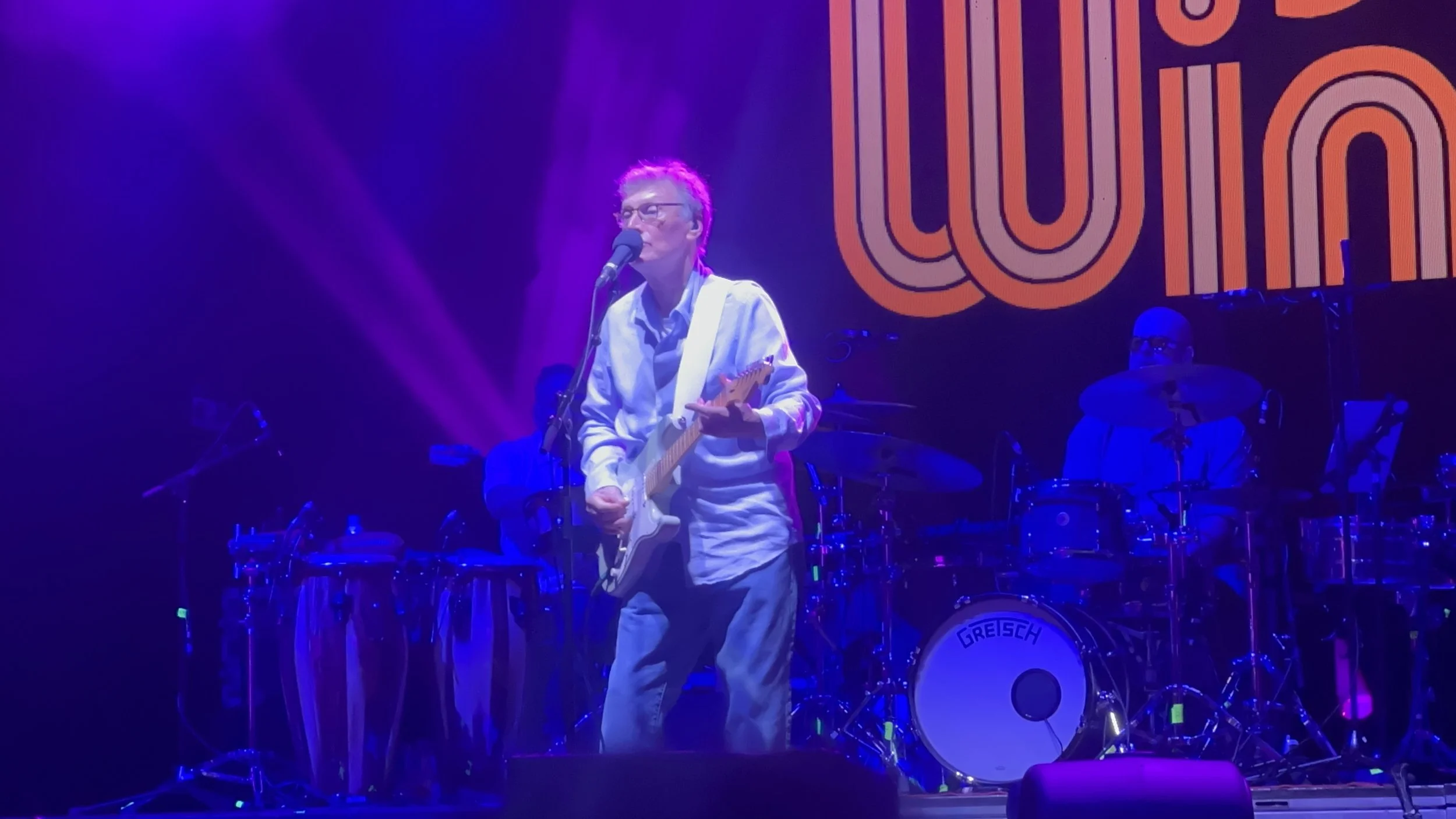
Steve opened with “Glad”, and what a way to start.
That unmistakable Traffic instrumental immediately transported the audience back to John Barleycorn Must Die, and from the first notes it was apparent that this was going to be no exercise in nostalgia. Winwood may have been revisiting some of the defining music of his past, but he was doing it as a living, breathing musician rather than someone simply going through the motions.
Then came “Can’t Find My Way Home”, one of those songs that seems to exist outside of time.
Originally recorded with Blind Faith, it remains one of Winwood’s most haunting pieces of work, and hearing that voice still effortlessly inhabit the song was one of those moments when you suddenly realise just how extraordinary the man’s musical history actually is.
Then came Timmy Thomas’s “Why Can’t We Live Together.”
Another reminder that Winwood has never been confined by genre. Soul, blues, rock, jazz, R&B — all of these musical languages have been part of his vocabulary throughout his career. His interpretation of the song has become a fascinating part of his live repertoire, allowing that distinctive Hammond and keyboard sound to take the music somewhere entirely his own.
Then the history really began rolling.
“I’m a Man.”
The Spencer Davis Group.
A song originally recorded by a teenager who had already developed a musical identity that most artists spend a lifetime searching for.
And from there into Traffic’s “Forty Thousand Headmen” — which was stunningly good — before moving into the solo years with “Roll With It” and “Back in the High Life Again.”
By now, the set was effectively travelling through several decades of popular music without ever feeling like a greatest-hits package.
And then came “Dear Mr. Fantasy.”
If there was one song that summed up why Winwood remains such a compelling live performer, surely this was it.
Traffic’s psychedelic masterpiece has been played countless times over the decades, but there is something about hearing Winwood himself perform it that gives it a different weight. This is not simply somebody covering an old Traffic song. This is one of the people who created the history standing in front of you and bringing it back to life.
Then came “Higher Love.”
And suddenly the entire audience seemed to recognise that we had arrived at another chapter altogether.
The huge 1980s hit remains an absolute monster of a song live, and followed by “Gimme Some Lovin’”, the set finished exactly where it should — with the place absolutely rocking.
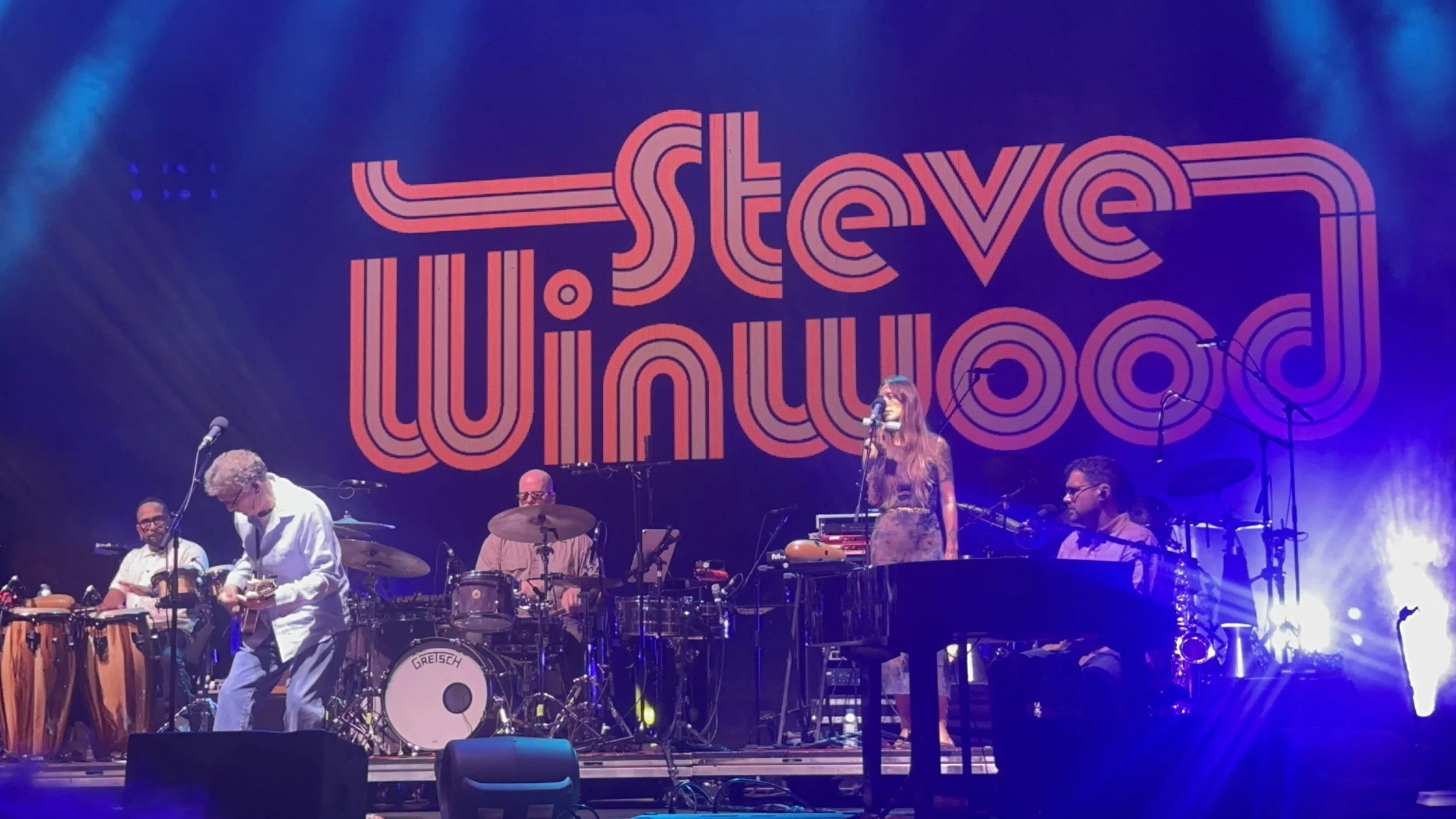
The Band
Of course, Steve Winwood doesn’t do this alone, and the band behind him on both nights were absolutely superb.
Paul Booth on saxophone, flute and keyboards, Nate Williams on keyboards and backing vocals, Tristan Banks on drums and Edwin Sanz on percussion provided a remarkably tight and sympathetic musical foundation, while Randall Bramblett, returning to Winwood’s band for this 2026 run, added keyboards, flute and saxophone.
This was a seriously accomplished group of musicians, playing with the sort of precision, restraint and musical understanding that allowed Steve’s songs to breathe. Nothing felt overplayed or unnecessarily showy; everyone was there to serve the music, while still bringing their own considerable musicianship to it.
And then there was the particularly special sight of Lilly Winwood singing her heart out alongside her father. She wasn’t simply there to provide backing vocals — she threw herself into the performance and was clearly loving every moment of it. Seeing that family connection on stage added another dimension to what was already a pretty special couple of evenings.
Watching Steve surrounded by musicians who so clearly understand the music — and seeing Lilly right there in the middle of it, giving everything she had — made the whole performance feel remarkably warm and organic.
It was a band rather than simply a backing group, and on both nights they were exceptionally good.
The only thing that could really have been bettered on either night was the length of Steve’s set.
I just wish it had been so much longer.
The depth and breadth of the material he has written, recorded and performed throughout his career is extraordinary, and ten songs barely scratches the surface.
But perhaps that was inevitable. How do you condense a career like Steve Winwood’s into a single set?
The Sound
There was also quite a contrast in the sound levels between the two performances.
Steve’s volume was, to my ears, absolutely spot on — powerful enough to give the music the weight it deserves, but beautifully balanced and comfortable to listen to.
Credit has to go to Steve’s sound engineers here. They had everything absolutely on form. Every instrument was clear, beautifully balanced and sitting exactly where it should be, with Steve’s voice coming through with remarkable clarity. It was the sort of sound you notice precisely because there was nothing fighting for your attention.
These guys are clearly masters of their game.
John Fogerty’s set was another matter altogether. It was loud — really loud. At times it was at a magnitude that could probably have burst an ear drum or two!
There was plenty of fun to be had in Fogerty’s performance, but, being honest, the sheer volume made it rather uncomfortable at times. After the beautifully judged sound of Steve’s set, the difference was particularly noticeable — and it reinforced just how much skill goes into getting a large outdoor show sounding right.
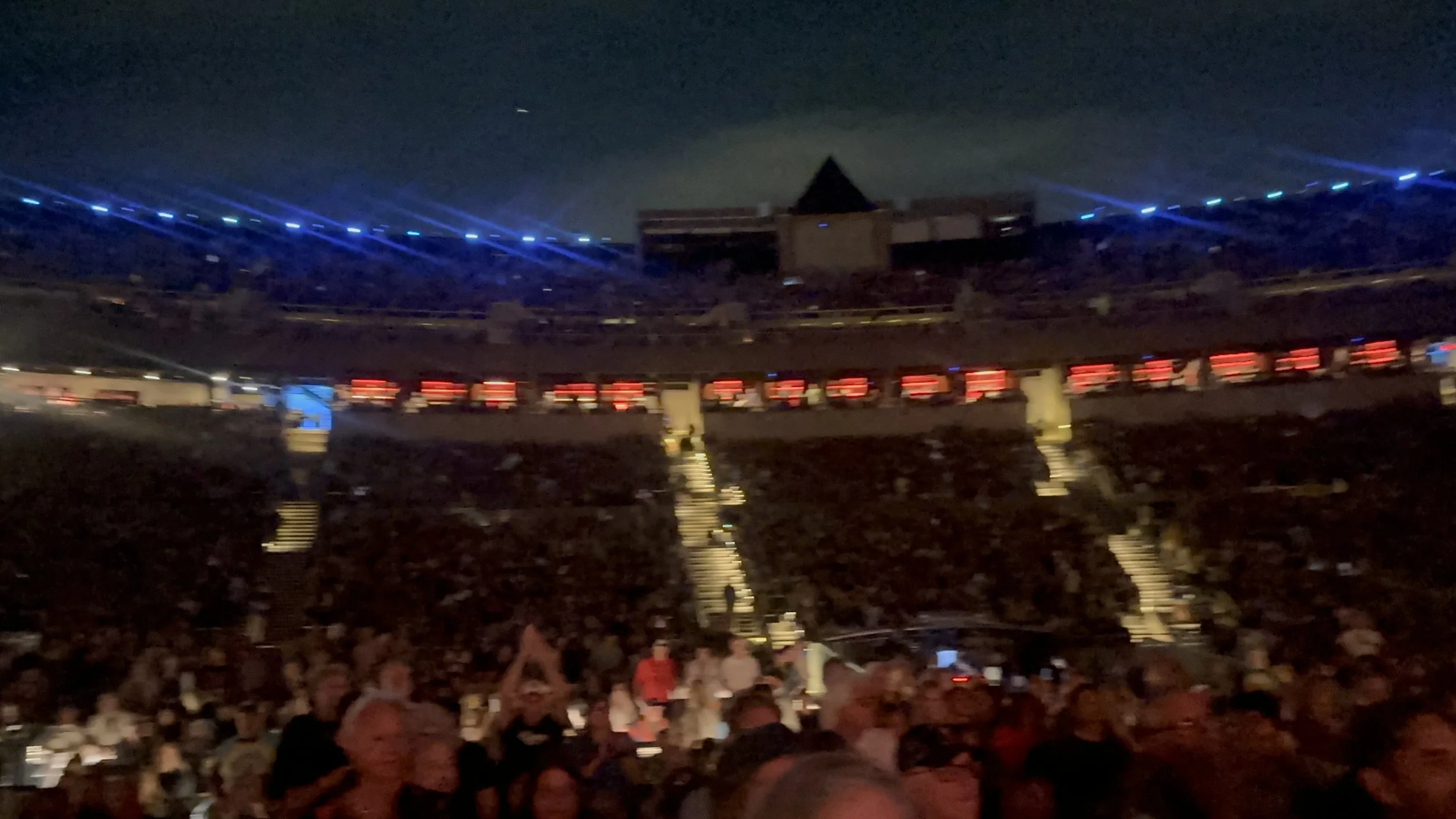
Jones Beach
Jones Beach was an amazing place to see Steve, but for me it carried an additional layer of rock ‘n’ roll history.
I’m a big Deep Purple fan, and it was impossible not to think about what had happened on that very same stage exactly one month earlier.
On August 12, Ritchie Blackmore had unexpectedly joined his former Deep Purple bandmates on stage at Jones Beach to perform “Smoke on the Water” — his first live appearance with the band since 1993.
So there I was, in a venue that had only weeks earlier witnessed that extraordinary Deep Purple reunion, now watching another of the great architects of British rock history performing “I’m a Man,” “Forty Thousand Headmen,” “Dear Mr. Fantasy” and “Gimme Some Lovin’.”
There was definitely a feel to the place.
And on the night we were there, there was another rather surreal element to the surroundings. The rising tide was lapping against the concrete walkways, with the water creeping around the edges of the venue as the evening progressed. With the darkness descending and the stage illuminated, it gave Jones Beach an almost dreamlike atmosphere — a rather extraordinary setting in which to hear music that has travelled so far through rock history.
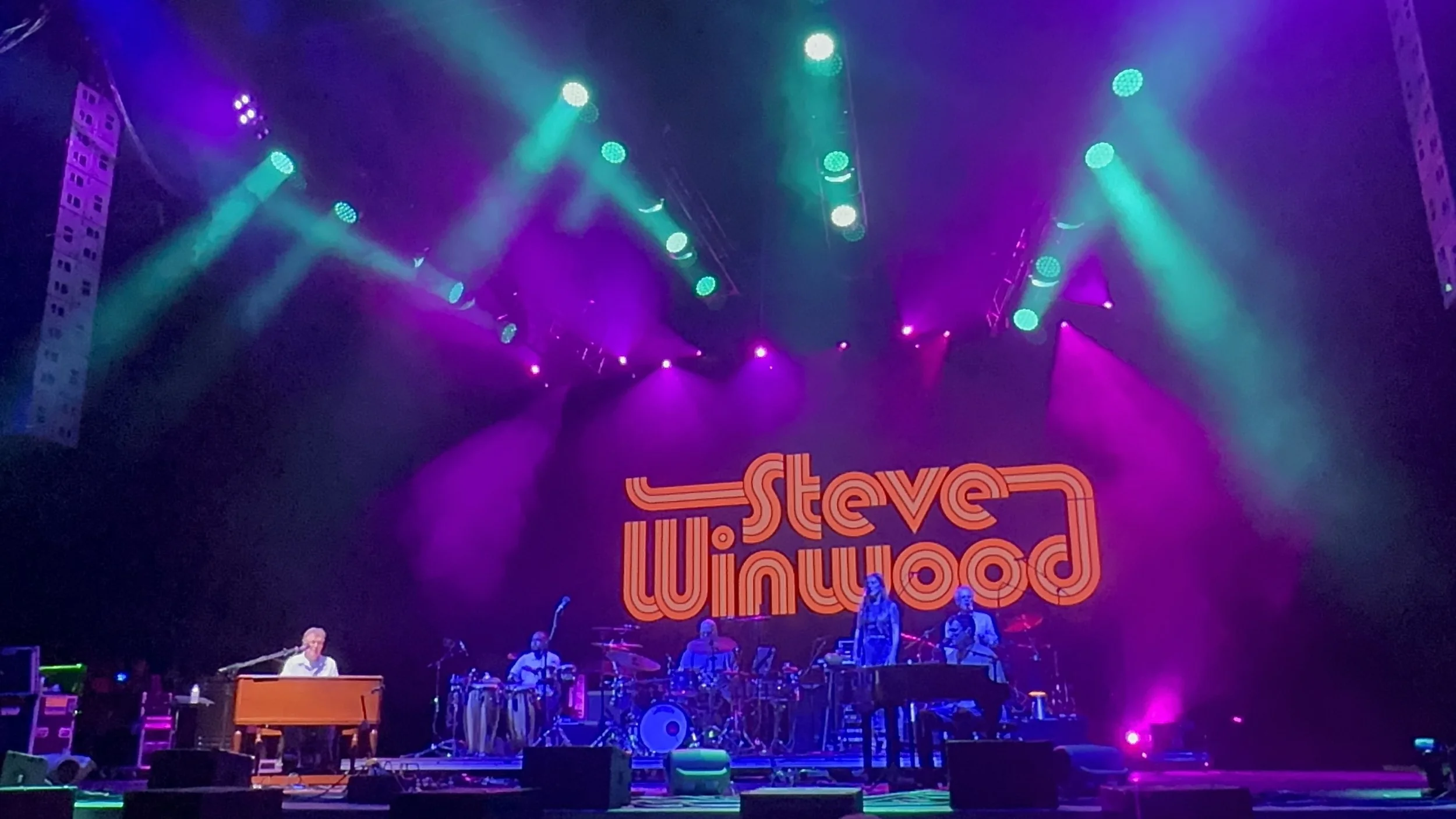
Bethel Woods
Then, the following night, came Bethel Woods.
For someone who is a massive Jimi Hendrix fan, it was almost impossible not to feel the weight of where we were standing.
This is the hallowed ground of Woodstock.
And this was the very site where Hendrix brought the Woodstock festival to its conclusion in the early hours of Monday morning, August 18, 1969. His performance became one of the defining moments of the entire festival, including that extraordinary rendition of “The Star-Spangled Banner.”
But there was an even more remarkable connection.
Steve Winwood had actually played with Jimi Hendrix.
In 1968, Winwood joined Hendrix at the Record Plant in New York, where he played organ during the Electric Ladyland sessions. The connection between the two musicians adds another extraordinary thread to the story.
Think about that for a moment.
Standing at Bethel Woods in 2026, watching Steve Winwood perform “Dear Mr. Fantasy”, knowing that this same man had actually sat alongside Jimi Hendrix in a New York studio and contributed to Electric Ladyland.
And the story didn’t quite end at Bethel Woods.
In the days following the concert, I was back in Manhattan and took the opportunity to visit Electric Lady Studios — somewhere I hadn’t been for nearly thirty years, having last been there while working on another project.
So suddenly the connection with Hendrix, Winwood and Electric Ladyland wasn’t simply something I was thinking about while standing at Bethel Woods. I found myself physically back at the studio where that extraordinary piece of musical history had been created.
That’s when a concert becomes more than simply a concert.
It’s a connection across generations of music history.
And perhaps that is what made these two nights so memorable.
Jones Beach gave us the ocean, the night air and its own very recent piece of rock history.
Bethel Woods gave us the ghosts of Woodstock — and Hendrix.
And in the middle of it all was Steve Winwood, still standing on stage, still singing, still playing, and still connected directly to so much of the music that helped define those extraordinary decades.
And perhaps the biggest thought I came away with from these two nights is this: the world really does need a new Steve Winwood record.
Hearing him perform this material with such authority, surrounded by such a superb band and still sounding so completely at home on stage, only underlined how much there is still to say musically.
There is no shortage of history to celebrate, but Steve has never been an artist who belonged solely to the past. These shows were a very timely reminder that the creative well is clearly still there.
So Steve, if you’re listening — there really is no time like the present. We need a new Winwood album.
Two nights.
Two legendary locations.
Decades of musical history.
And hopefully, perhaps, a new chapter still to come.