Uriah Heep — Maid of Stone Festival, Mote Park, Maidstone - 19th July 2026
Uriah Heep — Maid of Stone Festival, Mote Park, Maidstone 19th July 2026
Review by Robert Corich
Every festival has one performance that somehow rises above everything that has gone before it.
At Maid of Stone 2026, that performance belonged to Uriah Heep.
And perhaps that shouldn’t have been a surprise. This was, after all, a band with more than half a century of history behind them, closing a festival that has established itself as one of the most enjoyable fixtures on the British rock calendar.
But there was something else in the air as the lights went down.
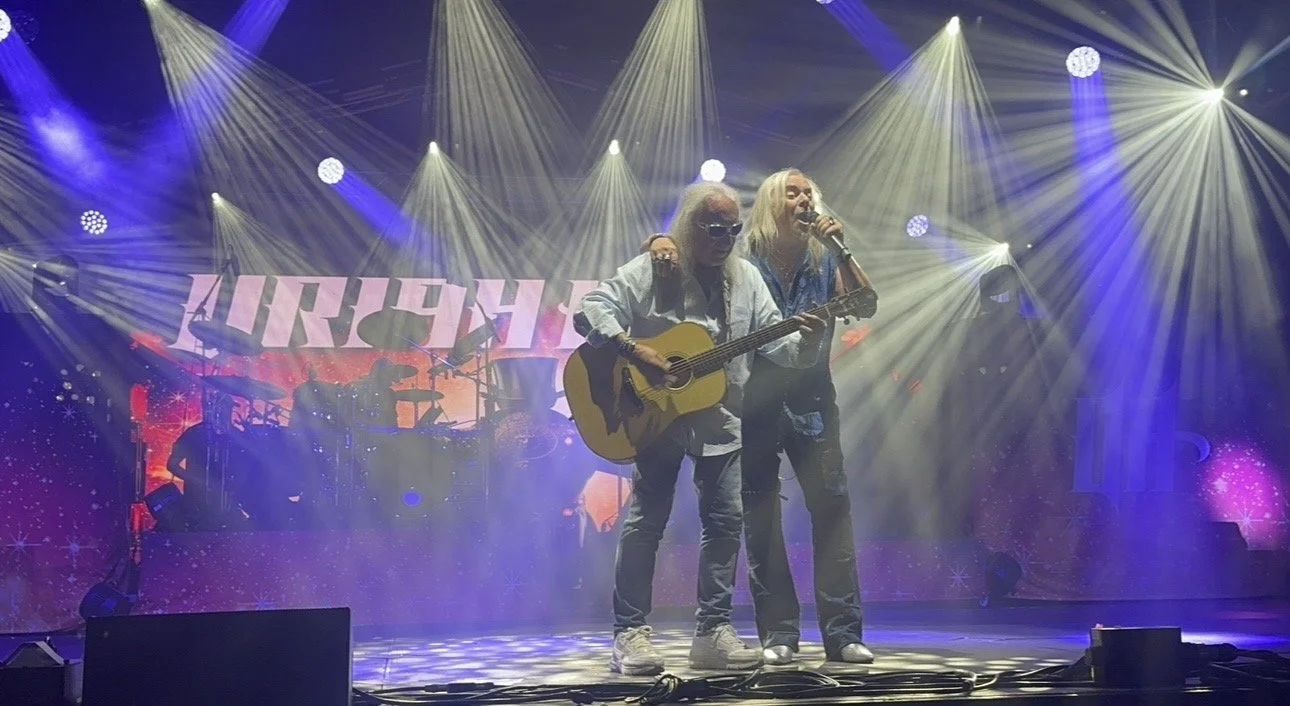
Mick Box was back.
And this wasn’t simply the usual rock-star entrance and obligatory roar from the crowd.
There was genuine emotion.
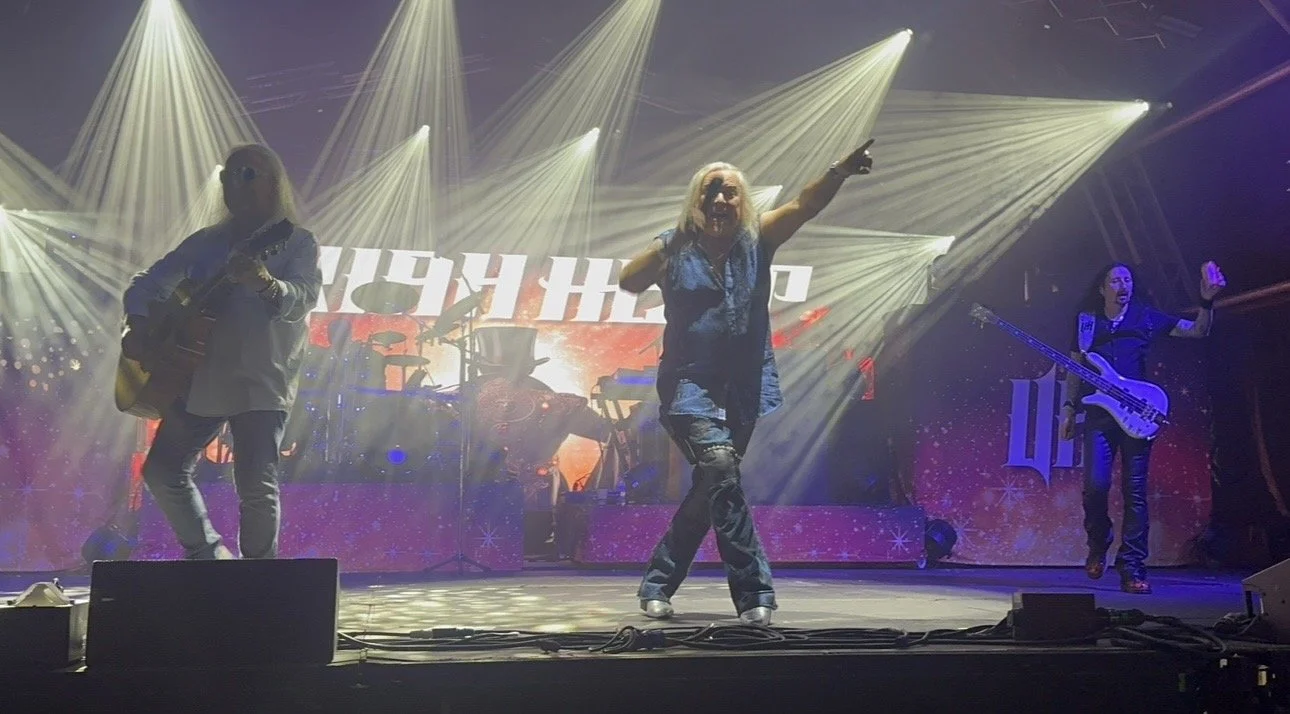
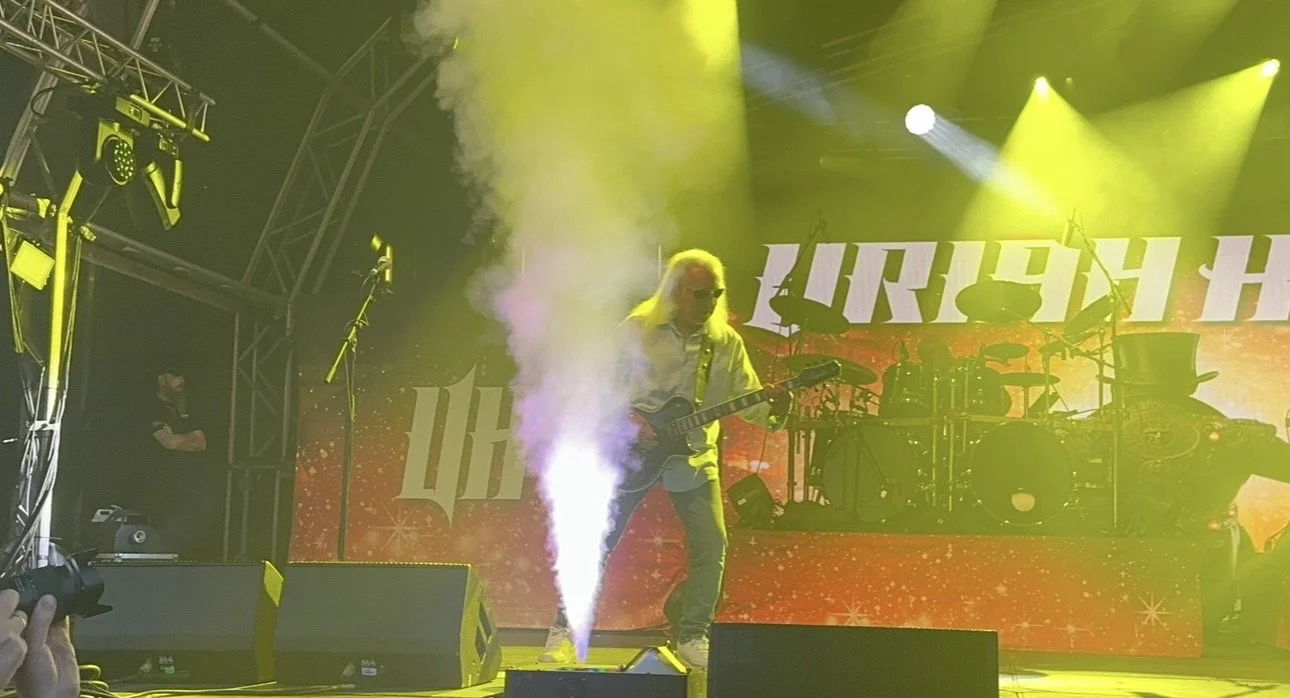
For those of us who have watched Mick Box and Uriah Heep for decades, seeing him walk back onto that stage after his recent winter illness was quite a moment. The reaction from the Mote Park crowd carried something more than excitement. There were cheers, certainly, but also that unmistakable sense of relief and affection you get when somebody you genuinely feared you might not see on a stage again suddenly appears in front of you, guitar in hand, looking ready to get on with the job.
And get on with it he did.
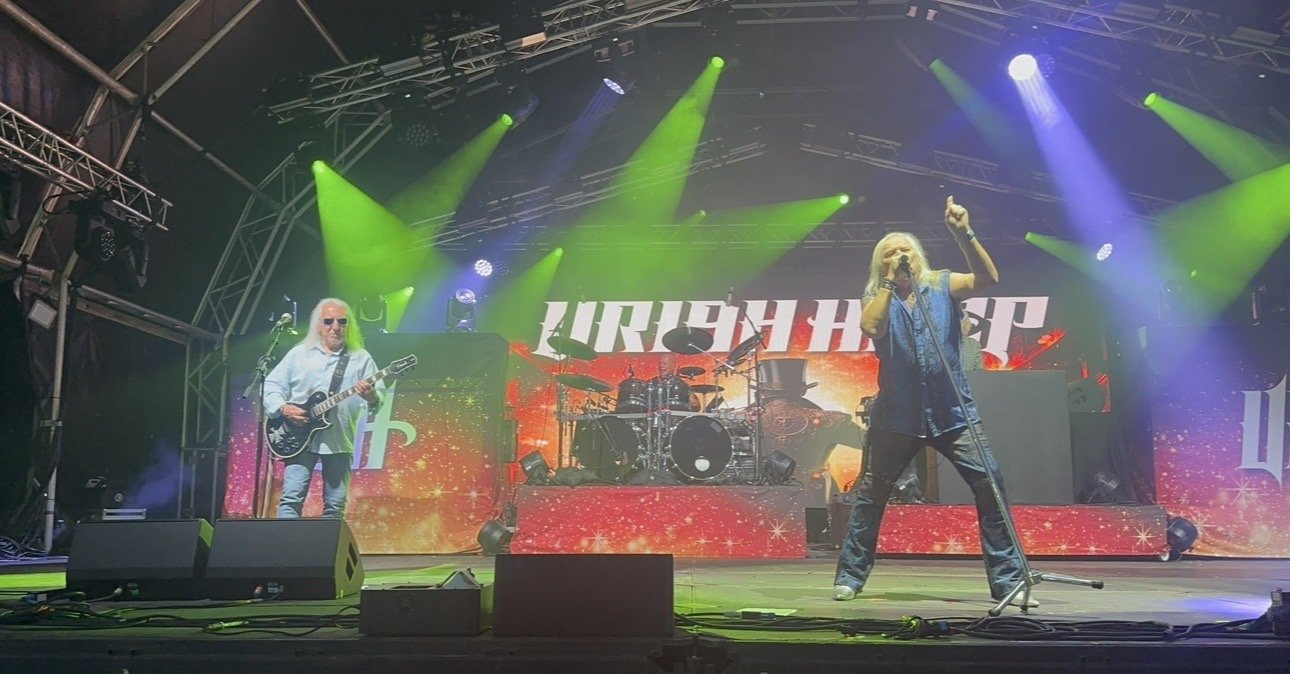
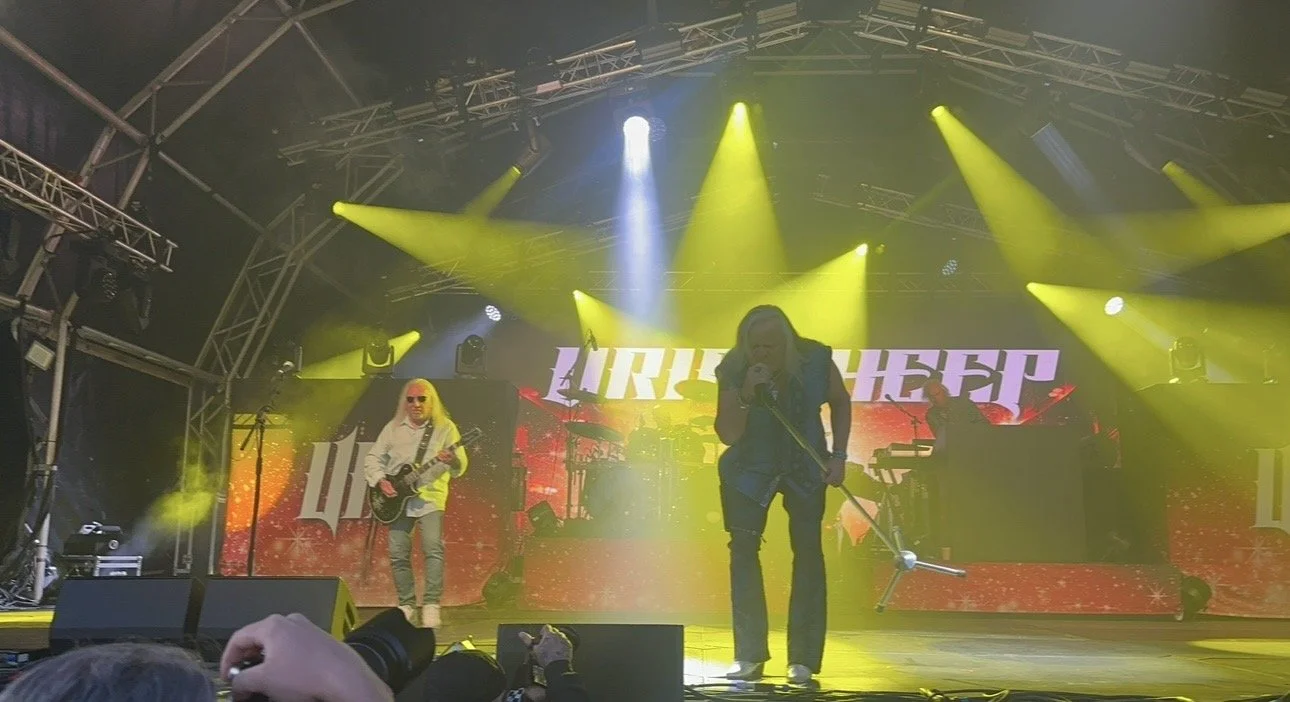
The opening “Grazed by Heaven” immediately dispels any suggestion that this is going to be a cautious comeback. From the first notes, the band sound completely committed, with Bernie Shaw’s voice soaring over that unmistakable Heep combination of heavy guitar, Hammond textures, harmony vocals and prog-rock grandeur.
Then “Save Me Tonight”, before “Shadows of Grief” tears the evening wide open.
This is an epic performance.
Dark, heavy and gloriously expansive, it demonstrates everything that made Uriah Heep such an important part of British hard rock in the first place. The song builds with an almost prog-rock sense of drama, and live it feels considerably larger than its studio counterpart.
And Bernie Shaw?
His voice hasn’t sounded this good for a while.
There is a power and clarity to it tonight that is genuinely impressive. The high notes arrive with confidence, the phrasing has weight and there is none of the sense that a singer of his vintage is carefully managing his way through material that demands considerably more than most sensible people would volunteer for.
Perhaps we should put it down to the vintage port.
Shaw recently celebrated his birthday, and if the vintage port and various rum based concoctions consumed during those celebrations has somehow been responsible for refining the vintage of the voice, then I suggest he keeps the bottle within easy reach.
Whatever the explanation, the result is bloody good.
And Phil Lanzon is absolutely on fire.
His keyboards aren’t simply filling in the gaps between the guitars; they are fundamental to the architecture of the music. The Hammond sound gives Heep that enormous, slightly sinister weight, while Lanzon’s ability to move from subtle atmosphere to full-blown thunder is one of the reasons the band sound so powerful.
Then comes “Stealin’”, and by now it is becoming apparent that this isn’t a nostalgia act having an emotional evening.
This is a proper rock band absolutely firing.
And the rhythm section deserves special mention. Russell and Davey are as solid a foundation as Uriah Heep have had for many years, providing the kind of muscular, locked-in propulsion that allows Lanzon’s keyboards and Box’s guitar to occupy all that space above them.
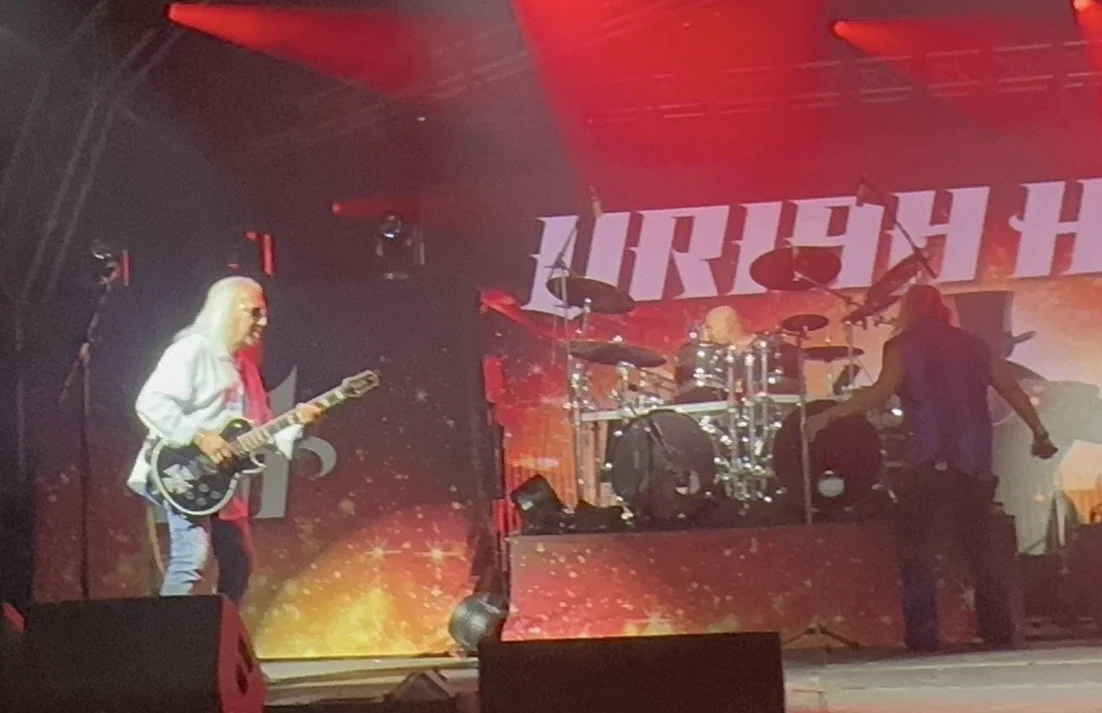
Russell’s drumming is both brutally hard-hitting and remarkably precise. There is very little wasted motion: when he hits, he hits with the sort of authority that makes you wonder whether Russell is really an adequate name for the man behind the kit.
Perhaps “Thundersticks” would be more appropriate.
He provides the thunder, Davey supplies the weight, and together they form a rhythm section that gives the rest of Heep an extraordinarily solid platform from which to launch themselves.
And perhaps I’m slightly biased here, being the Kiwi in the room, but there was something particularly satisfying about hearing Davey lay down that bass.
The comparison with Gary Thain isn’t simply about nationality. Thain had already established an extraordinary reputation with the Keef Hartley Band before joining Uriah Heep, and his playing had a melodic intelligence and adventurousness that went far beyond simply holding down the bottom end. By the time he joined Heep, he was already a seriously respected musician.
So when Davey started locking into that groove at Mote Park, I couldn’t help thinking about Thain.
Perhaps I’ve simply got a Kiwi ear for these things.
Davey certainly isn’t a New Zealander — but there was something in his playing that seemed to connect with that great Thain tradition: powerful, melodic and completely integral to the music.
Maybe Gary Thain’s musical ghost has been floating around the Heep camp for the last fifty years and, on this particular afternoon, decided to stand a little closer to the bass player and his cabinet.
Whatever the explanation, Davey was magnificent.
And alongside him, Russell — or perhaps “Thundersticks” — was delivering the kind of hard-hitting, precise drumming that gives the whole band its muscle.
Thundersticks and the ghost of Gary Thain.
Not a bad rhythm section.
“Hurricane” provides the newer edge before “The Wizard” takes us straight back into the mythology that made Heep such a distinctive force in the early seventies. The acoustic guitar, keyboards, vocal harmonies and slightly mystical atmosphere remain intact, proving that the band’s more delicate side can still sit comfortably beside the heavier material.
Then comes “Sweet Lorraine”, another reminder that Uriah Heep were never quite like anyone else. They could be heavy without being relentlessly aggressive, progressive without disappearing up their own musical backsides, and theatrical without becoming ridiculous.
That balancing act is much harder than it sounds.
And then “The Magician’s Birthday.”
Another epic performance.
The song builds into one of those huge, theatrical Heep moments where everything seems to expand — Box’s guitar, Lanzon’s keyboards, Shaw’s vocals and the rhythm section all pushing in the same direction.
During Mick’s guitar solo there is another little piece of magic.
Anyone who has watched Box over the years will recognise those now-legendary hand movements as he moves between picked notes, fingers seemingly hovering and gesturing around the guitar. From the audience they can look almost mystical — as though Mick isn’t simply playing the instrument but conducting some invisible force above it.
Given the title of the song, the visual effect is almost suspiciously appropriate.
Of course, there is nothing supernatural about the mechanics. It is an experienced guitarist using movement, timing and phrasing to create his own visual language. But standing in Mote Park, with Lanzon’s keyboards swirling around him and the band building behind him, it looked for all the world as though the magician really was performing some sort of spell.
And after the year Mick has had, there was something rather fitting about watching him up there again, guitar in hand, seemingly conjuring the music out of thin air.
Then comes “Gypsy.”
Now we’re really back at the beginning.
The opening riff still sounds enormous, and live it carries none of the dusty feeling that can sometimes accompany songs that have been performed for fifty years.
It sounds alive.
Then “July Morning.”
The big one.
The keyboards, atmosphere and those huge vocal lines combine to create exactly the sort of moment that explains why Uriah Heep have remained a live band for so long.
And with Lanzon in such commanding form, the song has all the grandeur it needs without becoming bloated.
Then comes “Lady in Black.”
There are songs that belong to their bands.
And there are songs that eventually belong to everybody.
Lady in Black is firmly in the latter category, and by now the Mote Park audience is doing much of the work for them.
But underneath all the singing there is still that feeling that this isn’t simply another festival set.
We’re watching Mick Box play again.
And that matters.
The encore begins with “Sunrise.”
And if Shadows of Grief was the performance that showed the muscle, and The Magician’s Birthday the theatrical grandeur, then Sunrise is where everything comes together.
Another outstanding performance, huge and uplifting, with Lanzon’s keyboards providing the perfect foundation for Box and Shaw to take the song skywards. Russell and Davey are equally important here, giving the whole thing the muscular propulsion it needs.
It is a magnificent way to begin the encore — and almost feels like a second finale in itself.
Then “Easy Livin’” provides the inevitable final blast of classic Heep.
And what a way to end a festival.
Guitars.
Hammond.
Drums.
Vocals.
Harmony.
Volume.
And a chorus that seems determined to follow you home.
But there is one thought that keeps coming back as the final notes disappear into the evening.
Someone should have been recording this.
Perhaps they were.
Perhaps a recording truck was sitting somewhere at the back of Mote Park, quietly capturing what was happening on stage.
I certainly hope so.
Because it might finally be time for a brand new Uriah Heep live album.
The band are simply too good at the moment to let this particular incarnation disappear into the archives. Lanzon is playing brilliantly, Bernie Shaw is singing better than he has for some time, Russell and Davey are providing a rhythm section with genuine powerhouse qualities, and Mick Box’s return has given the whole band an additional emotional charge that you can’t manufacture in a studio.
And those performances — “Shadows of Grief,” “The Magician’s Birthday” and “Sunrise” in particular — deserve to be heard again.
This is what a live album should capture.
Not perfection.
A moment.
And there was definitely a moment happening at Mote Park.
Mick Box’s return gave the performance its heart, but the quality of the band gave it its fire.
That combination is what made Uriah Heep the highlight of the festival.
Because rock music is full of stories about survival.
Occasionally you get to watch it happen in front of you.
The crowd at Maid of Stone didn’t simply welcome Mick Box back.
They seemed genuinely moved to see him there.
And perhaps he understood exactly what that reaction meant.
After illness, after decades of touring, after watching virtually every one of his original contemporaries come and go, there he was — guitar in hand, smile on his face and playing with the same determination that has carried Uriah Heep through more than half a century of rock’n’roll.
The songs remain.
The band remains.
And, most importantly, Mick Box remains.
Maid of Stone may have been the occasion, but this felt less like a farewell and considerably more like a statement.
Uriah Heep are still here.
They are still bloody good.
Phil Lanzon is on fire.
Bernie Shaw has apparently discovered the benefits of vintage port.
Russell — or perhaps Thundersticks — is pounding the drums with frightening precision.
Davey is carrying a little piece of the Gary Thain spirit.
And Mick Box is back.
As Mick himself might put it, these really were “‘Appy Days.”
Only, watching him on that stage after what he’s been through, it felt like rather more than a catchphrase.
It felt like a statement of intent.
Mick’s back. Heep are firing. The magic is still there.
And judging by the emotion in the crowd, there was nowhere else they would rather have been.
Now, somebody please put a microphone in front of this band and record the bloody thing.
It’s time for another Uriah Heep live album.
Oh, and please, please give that good old groover ‘Why’ a live airing for me will ya… it’s a lost classic.
‘Appy Days indeed.